THE YANKS ARE COMING
US ARMY BANDS OF WORLD WAR I (1917-1919)

It was called “The Great War” before we began capitalizing and numbering our world wars. In just over 100 years, despite centennial events and commemorations, it has seemingly become America’s forgotten war. World War I (WWI) remains the only major American war of the 20th century not commemorated with a national memorial in the nation’s capital, Washington, D.C. WWI lacks the deep historical reverence, at least among many Americans, that World War II or even the Civil War enjoys. It doesn’t carry the hardened cachet of the Vietnam War or the Korean War. It doesn’t boast the acclaimed movies or TV shows.

By the time American troops landed in France, Europe had been at war for more than three years. The United States, despite espousing neutrality, was drawn into the war under pressure as the impact of events in Europe was felt in the United States. The US mobilized a large army of over 4 million men in less than a year-a herculean feat. Within a year and a half of the first US troops arriving in France, the war was over. American might prevailed.
The result was the emergence of the United States as a world superpower. The war helped shape what the United States would become for the next century. Yet WWI is not as well-known to many Americans as the Civil War or WWII. Just listing major battles is difficult for the average person. It has been known as America’s “forgotten war.”

With America’s entry into World War I and the mobilization of a large force, there was a further need for music in the military to support ceremonies, parades, and concerts, and to bolster troop morale. Today, the US Army Band’s mission is to “provide music throughout the spectrum of military operations, to instill in our soldiers the will to fight and win, foster the support of our citizens, and promote our national interests at home and abroad.” That same principle applied as the United States expanded its army in the summer months of 1917.

As the Army mobilized after the declaration of war in April 1917, military bands increased in number and strength due to the efforts of General John Joseph (“Blackjack”) Pershing, who was appointed Commander of the American Expeditionary Forces (AEF) in Europe. If ever there were an officer who could be credited with wholehearted support for military music, it would be General Pershing. His attention to music was evident in his desire to increase the number of bands and personnel, to form a headquarters band in France, and to establish a training school for bandleaders. He was also known to personally inspect bands. Probably no general officer was more concerned about music, since Robert E. Lee stated, “I don’t believe we can have an Army without music.”


The process for improving military bands had begun around the turn of the century, when a school for Army band leaders was established at Fort Jay (originally Fort Columbus) on Governor’s Island, New York. The school opened in 1911 through the efforts of Dr. Frank Damrosch (brother of famed conductor and composer Walther Damrosch), director of the Institute of Musical Art of the City of New York (later The Juilliard School), and Arthur A. Clappe, a former graduate of the Royal Military School of Music, Kneller Hall, England.

Frank Damrosch served as chorus master at the Metropolitan Opera House in New York from 1885 to 1891. In 1892, he organized the People’s Singing Classes and was instrumental in founding the Musical Art Society of New York. In 1897, he became supervisor of music in the public schools in New York. In 1898, Damrosch succeeded his brother Walter as conductor of the Oratorio Society, which he directed until 1912. During his career, he and his sister Clara Damrosch also taught at the Veltin School for Girls in Manhattan. In 1905, with James Loeb, he founded the New York Institute of Musical Art (later the Juilliard School) and became its director, with the goal of reproducing the quality of instruction found in European conservatories. He directed it until 1933.
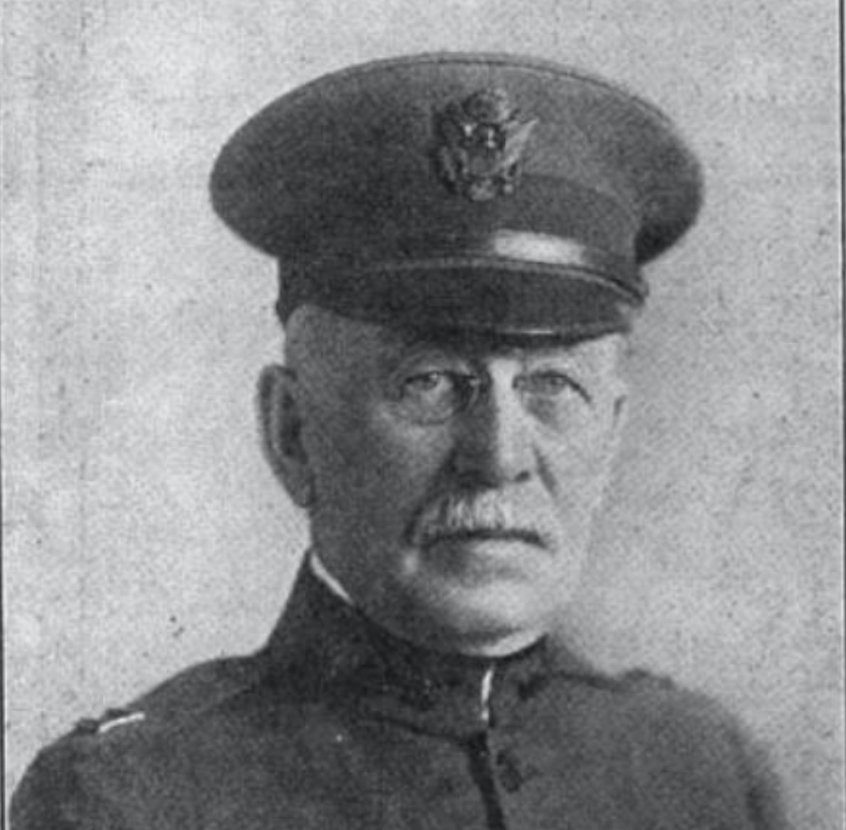
Known as “the ‘Grand Old Man’ of Music,” Arthur Clappé had many years of international musical training. Born in Ireland, where his father was stationed as a regimental commander in the British military, he spent his childhood in London. He graduated from the Royal Military School of Music in 1873 and held a faculty position there for seven years. Clappé then became the bandmaster of a British regiment and was stationed in India and later Canada. He moved to the United States in 1888, when he was hired as “bandmaster and teacher of music” at the United States Military Academy, West Point, New York. After his term at West Point and several years spent publishing a musical journal, he joined the faculty of the U.S. Army Music School on Governor’s Island, New York Harbor, in 1911. Finally, he became principal of the Army Music School and worked with the War Department to supply camp band members.
As Damrosch wrote in his 1936 history of the school (Institute of Musical Art, 1905–1926), “I could not but be impressed by the fact that the worst music from all the bands we heard was that of the United States Army bands. I was so chagrined over this condition that … I requested that the Institute of Musical Art offer to the Secretary of War a certain number of scholarships for Army band musicians, in order that they might be trained to become competent band leaders and teachers of band musicians in the United States Army.”

At the school for Army band leaders at Fort Jay, instruction was modeled after courses for training bandleaders in Great Britain, France, and Germany. The curriculum included musical form, applied acoustics, the history of music, wind band instrumentation, military band arranging, ear training, conducting, and pedagogy. In 1921, the Army Music School, as the program was renamed, moved to the War College in Washington, D.C., and its affiliation with the Institute of Musical Art was discontinued. The Army Music School itself was closed in 1928, partly due to Army downsizing and perhaps because a sufficient number of qualified bandmasters was thought to be available. It was reactivated during World War II and now exists as the U.S. Army School of Music, based at the Naval Amphibious Base Little Creek in Virginia Beach, Virginia.

Just how bad was the music of military bands prior to World War I? Probably not very good in the relatively small Regular Army of the time. There was little inducement for musicians to join the military bands, given low pay (although better than other soldiers’), limited training, and postings to distant locations. Certainly there were many good bands attached to National Guard and militia regiments, but these were part-time organizations composed of professional musicians hired by the regiments. However, despite the pay, the bands were still deemed rather poor.

In the Infantry Journal (Vol. XII, No. 1, July-August 1915), Major (ret.) F. A. Mahan wrote in his article “Military School of Music” about the poor state of the bands in the US Army. At that time, there were 72 Army bands (across all services). He estimated that there were 2,016 bandsmen, costing the government over 1.5 million dollars in salary, rations, equipment, and other expenses. His conclusion was as follows:
“Thus it is seen that, with the exception of the principal musician and chief trumpeter, the members of the band are paid, grade for grade, far more than any other men in the Army and yet no part of the service is so badly performed and nowhere is everything in such chaotic condition.
Our bands are the worst, probably, in the world and yet it is doubtful whether any other country pays so much for bands. Ours bands cost, in round numbers, $1,500,000 a year for which the country and the Army receive only an insignificant return.”
Mahan listed many causes of the poor bands, including: a lack of musical knowledge among a large portion of the officer corps, a lack of bandleader training and education, and difficulty recruiting and retaining good musicians. He stated that while the bandmaster school at Governor’s Island was doing what it could to help the situation, it graduated only five students a year. He called for the formation of a special school for bandsmen, similar to those for other specialty fields of the Army (engineers, farriers, cooks, medical, etc.).

Perhaps General Pershing read this article, which appeared in the United States Infantry Association Journal. He was likely aware of the poor state of military music, and his opinion was cemented when he arrived in France with his staff in June 1917. While in Europe, he heard many fine French and British bands. He believed military bands were important for maintaining soldiers’ morale. One of General Pershing’s remarks during a dinner in France was characteristic of his intention to improve the music of US Army bands, “When peace is declared and our bands march up Fifth Avenue, I should like them to play so well that it will be another proof of the advantage of military training.”

In 1916, a bill passed by Congress established bands for the headquarters companies of Infantry, Cavalry, and Artillery regiments (including Coast Artillery) and the Corps of Engineers.
There were also non-combatant units that had bands (Hospital, Pioneer, Army Service Corps, etc.). These headquarters bands, of 28 men each (including the band leader), were composed as follows: one enlisted bandleader ($75.00 per month), one assistant band leader and one sergeant bugler ($40.00 each), two band sergeants (same pay as other sergeants in the Army), four band corporals (same), two musicians first class ($36.00 each), four musicians second class ($36.00 each), and 13 musicians third class ($24.00 each).

Noting that the military music of France and Great Britain was far superior to that of the United States, General Pershing took steps to improve the Army’s band program.
- He urged Congress to increase the number of bands. In July 1918, Congress responded by authorizing additional bands for the duration of the war. By Pershing’s own account, there would be over 200 bands in France.
- He increased the size of bands from 28 to 48 instruments. This was later reduced in 1922 to 36 for Infantry and Field Artillery and to 28 for Cavalry and Coast Artillery.
- In October 1918 Pershing established a band school at Chaumont, France for the training of band leaders and bandsmen called the “American E. F. Bandmasters and Musicians’ School.” Chaumont was the AEF Headquarters. Records of the school can be found in the National Archives in Washington, DC https://www.archives.gov/research/guide-fed-records/groups/120.html
- He authorized band leaders to be commissioned as Lieutenants. This authorization was to be rescinded after the war, with band leaders returning to Non-Commissioned Officer status. John Philip Sousa continued the cause of commissioned officers with his testimony before Congress in 1927 and 1928, arguing for the commissioning of band officers.
The personnel for a 48 Piece Military Band (Leader plus 47 instrumentalists) was set per General Orders No. 183. Paragraph 2 G. H. Q., A. E. F. (Oct. 21. 1918) as:
Commissioned:
1 first or second lieutenant (band leader).
Enlisted:
1 band leader.
1 assistant band leader.
1 sergeant bugler.
4 band sergeants.
6 band corporals.
6 musicians, 1st class.
0 musicians, 2nd class.
20 musicians, 3rd class.
The instrumentation for a 48 Piece Military Band (Leader plus 47 instrumentalists) was set per General Orders No. 183. Paragraph 2 G. H. Q., A. E. F. (Oct. 21. 1918) as:
First Group
1 piccolo in D flat
1 Flute in C
1 Flute in D flat
2 Oboes in C
2 Bassoons in C
1 Contrabass Sarrusophone in E flat
Second Group
1 Clarinet in E flat
2 Solo Clarinets in B flat
4 First Clarinets in B flat
4 Second Clarinets in B flat
2 Alto Clarinets in E flat
2 Bass Clarinets in B flat
1 Alto Saxophone in E flat
1 Tenor Saxophone in B flat1 Baritone Saxophone in E flat
Third Group
4 Trumpets in B flat
2 Cornets in B flat
4 French Horns in E flat (Substitute Altos for mounted bands)
3 Tenor Trombones in B flat
1 Bass Trombone in F
Fourth Group
1 Baritone in B flat (small bore)
1 Euphonium in B flat (4 valves)
2 Basses in E flat (4 valves)
2 Basses in BB flat (Helicon)
Fifth Group
1 Snare Drum (and Triangle)
1 Bass Drum and Cymbal
The following additional instruments will be issued in lieu of bassoons and oboes, which are not suitable for marching purposes:
2 Soprano Saxophones (in lieu of oboes)
1 Snare Drum (in lieu of bassoon)
“It is intended that the bassoonist shall play cymbals on the march. The above with the 47 authorized instruments will bring the total number to 51.”
It should be noted that there seemed to be a dearth of oboes and bassoons. Classes in those instruments, along with French Horn, were offered at the AEF Bandmasters and Musicians’ School in 1918-1919.

A Drum and Bugle Corps was also formed in each infantry regiment, comprising all company buglers. One bugler from each company played a drum, and another played a trumpet or cornet when with the band. All buglers were under the bugler sergeant for leadership and general instruction. The buglers formed in the rear ranks of the band while in formation and played the bugle or trumpet parts to marches such as Sousa’s “Sabre and Spurs” and M. L. Lake’s “American Trumpeter.”
General Orders No. 183 also called for the Quartermaster to procure and issue, for the use of all buglers in infantry regiments, the B-flat bugle used in the French Army (clairon) and the bugle (the M1894) being used, to be turned in to the Quartermaster Corps or issued to all organizations except infantry.

Prior to the declaration of war, the U.S. Army had fewer than 200,000 regular soldiers. More than 2 million American men would join the war effort in Europe through conscription (the draft) by the newly organized Selective Service (a title chosen to make the military draft more palatable to the public). Dozens of infantry and field artillery bands would be part of this huge military force, and approximately 7,500 bandsmen and bandleaders would serve in the conflict during the war’s last two years.

Some prominent American musicians during WWI included:

Percy Grainger served in the US Army as a bandsman with the 15th Coast Artillery Band at Fort Hamilton and later as an instructor at the Bandsman School at Governor’s Island. Grainger, an Australian pianist and composer, had been touring in England when he emigrated to the United States. He enlisted in the US Army and became an American citizen. He was not a good player but learned saxophone and oboe. “I long for the time when I can blow my oboe well enough to play in the band.”

Robert Russell Bennet had tried several times to enlist, but the condition of his feet, a result of his polio, deferred his service. To his great surprise and delight, Bennett received a letter from the army reclassifying him as fit for service. He was assigned to Jacksonville, Florida, as a teamster, largely because of his background as a farmer. However, for some unexplained reason, he was not sent to Jacksonville, so he went to Kansas City to visit his family and await further orders. From there, he was ordered to Camp Funston, Kansas, where he was made bandmaster of the 70th Infantry Band. “And what a band it was,” he later reminisced, “fifty-one men, one of whom could play” (The colonel in command of the camp called the band “a disgrace to the army”).
Even sadder than the ensemble’s performance was the fact that, before Bennett was discharged from the army less than two years later, twenty-two of the fifty-one died in an influenza epidemic that swept the camp. Bennett did not complete his term of service with the band. He still yearned to see action, but he failed his overseas physical again because of his feet and was sent to a detention camp, where he was assigned to guard duty and clerical work. He also occasionally entertained his fellow soldiers on the piano, played in a cafe orchestra on the base, and served as pit pianist for a visiting vaudeville troupe.

Irving Berlin was drafted and served in the 152nd Depot Brigade at Camp Upton in Yaphank, New York, and wrote a show called “Yip Yip Yaphank.” The show featured “Oh, How I Hate to Get Up in the Morning,” “This Is the Army,” and “God Bless America,” the latter of which was not used but became popular with Kate Smith in 1938, just prior to WWII.

John Philip Sousa received a commission as a Naval Lieutenant and helped train 300 Naval Bandsmen at Great Lakes Illinois He wrote several marches during WWI- “Naval Reserve”, “US Field Artillery”, “Sabre and Spurs”, “Solid Men To The Front.”

James Reese Europe who was a social band leader in New York providing music for the Castles Dance duo served as band leader with the 15th NY which became the 369th (Hellfighters)
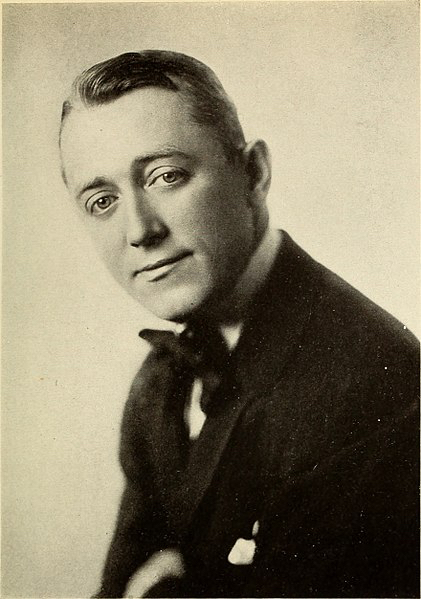
George M Cohan was too old to enlist (39) in 1917 but penned the most popular song during the war, “Over There.” It would, along with his contribution of other patriotic songs, earn him a Congressional Gold Medal awarded by President Roosevelt in May 1940.

Walter Damrosch was asked by General Pershing about the idea of forming a Headquarters Band composed of the best players from bands in France and led by the best bandmasters. He would audition the bandmasters over a few weeks and discovered that, while most were musically talented and ambitious, they lacked conducting skills. He also found a shortage of double reed instruments and French horns. Because of this, he proposed to General Pershing the formation of an eight-week music school at Chaumont. An excellent Headquarters Band was formed at Chaumont, which became a source of much gratification to the commander-in-chief and his staff, accompanying him on many of his ceremonial visits and functions. This would become “Pershing’s Band”.

For the most part, bandsmen were selected from the draftees or joined the regimental bands formed alongside the regiments. National Guard units brought their own bands as they entered federal service. Under the table of organization, the bands (called band sections) were assigned to the regimental headquarters company, which listed them by rank (Band Sergeant, Band Corporals, Musician First Class, Musician Second Class, and Musician Third Class) under the leadership of a commissioned officer.
Also included in the table of organization was a Sergeant Bugler. That position harkens back to the Civil War-era Principal Musician and had the same responsibilities. The Sergeant Bugler was in charge of all the regimental buglers (usually two to a company) and responsible for their training. In garrison, he played with the regimental band as needed, and in the field he served with the staff or commanding officer as the regimental bugler. Corporal Buglers were assigned to battalions (3-4 companies) as chief buglers.


Philip James (1890-1975) was a bandsman with the 308th Infantry Band. He was a pianist who was drafted as a regular Soldier in October 1917. Trained at Camp Upton on Long Island, he was assigned to an Infantry company but was allowed to be attached to the band if he learned a wind instrument. James quickly learned to play the saxophone well enough to become a member of the 308th Infantry Band, thus changing his wartime weapon from the rifle to an instrument. An arranger and a fill-in conductor at Camp Upton on Long Island and in France, he ended his military career in 1919 as a second lieutenant in the U.S. Army, serving as the conductor and commander of the Allied Expeditionary Forces General Headquarters Band (the famed “General Pershing’s Band”), with which he made the famous Victory Loan tour in U.S. cities during spring 1919.

A little bit about that band. In 1918 General Pershing asked Walter Damrosch to be a consultant for a planned Allied Expeditionary Forces (A.E.F.) Bandmasters and Musicians School. Around this time a decision was also being made to develop a large band in the tradition of the French Garde Republicaine Band that would perform for American ceremonial occasions, specifically those associated with Pershing

Pershing wrote, “I was very desirous of improving the music of the bands throughout the A.E.F., particularly on account of its beneficial effect upon the morale of the troops. For this purpose a number of musicians were selected from the various regimental bands and assembled in Chaumont for instruction. My idea also was to organize our bands so that it would be possible to separate each one into three parts when necessary to furnish music to the battalions, especially on the march. Out of the assembly of musicians grew the Headquarters Band. To Mr. Damrosch is largely due the credit for the development of this very remarkable organization.”


This large band was officially known as the A.E.F. General Headquarters Band but was referred to as “Pershing’s Band” and “Pershing’s Own” by French newspapers. It was staffed by 125 members, including a bugle and bugle corps. This was not the formation of The US Army Band (“Pershing’s Own”), which is located today at Fort Myer, Virginia, and serves as the premier band of the US Army. That band was formed on January 25, 1922, by order of Pershing: “You will organize and equip The Army Band.” It continues the musical excellence envisioned by General Pershing.

It is interesting that Pershing was not only interested in the martial and classical music provided by the bands but also in the popular tunes they could play. This was evident at a gathering he attended. “At a Savoy reception, Pershing complained that too much classical music was being played and asked for “some American jazz and ragtime,” with the result that the proceedings were enlivened by renditions of “K-K-Katy” and “We Don’t Want the Bacon, All We Want Is a Piece of the Rhine.” The general, it appeared, was suffering from a touch of homesickness.

Camp Meade, located south of Baltimore, was one of 16 garrisons built for troops drafted for World War I. Like Camp Upton on Long Island in New York, it was a center for organizing and training soldiers before deployment to France. During the war, over 100,000 troops were trained at Camp Meade, which later became Fort George G. Meade. Many bands were organized with newly formed regiments for duty overseas. At Camp Meade, there were many bands, including two African-American bands.

The first to be formed was the 315th Infantry Band. The regimental commander secured the services of Joseph Painter, a Pottstown, PA, musician, who recruited nine players from neighboring towns to form the nucleus of the band, which was then augmented by recruits at Camp Meade. They appointed a Sergeant Bugler, who procured bugles and drums to form the first bugle corps. The 315th arrived in France and lost the services of its leader, LT Painter, who went to instruct at the Bandleader school at Chaumont. For a time, the band performed secondary duties as litter bearers and medics. Unlike other bands that stayed to the rear, they divided into two sections and operated near the trenches, bringing rations and ammunition to the front lines and working burial details. After the Armistice, they resumed their musical mission. In 1919, they returned to Camp Meade and were discharged.

In WWI, the Army bands of the AEF played for their units, gave concerts for the wounded at Army hospitals, and performed at many recreation areas run by the Young Men’s Christian Association (YMCA) for soldiers, as well as in local French towns to maintain positive relationships between America and France. The bands participated in reviews, dress parades, ceremonies, church services, and funerals. Their musical duties included playing at reveille and at flag-raising and flag-lowering (retreat) ceremonies. As shown in many photographs, the bands marched with their regiment at the head of the column. On the home front, bands were called on not only to perform garrison duties but also to participate in Liberty Loan Drives to help raise money for the war effort.


During WWI, the Commission for Training Camp Activities (CTCA) pioneered a program in which civilian song leaders were assigned to camps throughout the United States. The CTCA had been formed before the war to help improve conditions in camps where disorder, drunkenness, and sexual immorality were prevalent. According to the War Department, the CTCA’s mission was “to supply the normalities of life to nearly a million and a half young men in training camps, and to keep the environs of those camps clean and wholesome.”

Song leaders were hired to lead Soldiers in sing-alongs. These men (and a few women) were instructed to organize regular community singing, train officers as song leaders, and cultivate musical talent among Soldiers. The initial reason for including singing and other CTCA activities in military training was to provide troops with constructive recreational alternatives and discourage bad behavior. Singing was initially considered a form of entertainment, but as military leaders observed its positive results, they came to view song as a valuable strategy for raising and maintaining morale. Raymond B. Fosdick, Chairman of the CTCA, explained, “our fundamental aim in all this work is to create a fighting machine. We never lose sight of that. You cannot have a fighting machine unless the men composing it are contented.” Singing proved an efficient method of maintaining that contentment, as Fosdick also admitted, “[singing] is the most popular thing we have tried thus far. The men are crazy about it, and the officers, too.”

The National Committee on Army and Navy Camp Music (later called the National Committee) was tasked with publishing an official songbook for distribution to song leaders, officers, and soldiers. The purpose was to familiarize soldiers with army songs and encourage their singing. The first songbook, “Songs of the Soldiers and Sailors U.S.,” was published in the fall of 1917. This collection featured songs that “were then popular in the camps, together with others of sure appeal and true value.” In 1918, the second edition was published and renamed Army Song Book. Songs were selected based on song leaders’ reports on their popularity. Bands provided backing for sing-alongs. Soldiers were issued songbooks containing patriotic songs.

Another duty of bandsmen was to accompany the physical training of soldiers in the field as they participated in exercises and rifle drill maneuvers. As noted in the Manual of Physical Drill-United States Army by Edmund Butts, music by Edwin G. Clarke (brother of Hebert L. Clarke) appears at the end of the manual. Unfortunately, only the 1st Cornet part is printed. In previous wars, bandsmen, along with field musicians, were called on to perform secondary duties as medical assistants and stretcher bearers.
As mentioned, the 315th musicians were called upon to perform secondary duties. According to Walter Damrosch, Pershing stopped using military bandsmen for stretcher-bearer duty during battles. “From now on, bandsmen are not to be used any longer as stretcher-bearers except in cases of extreme military urgency.”

As regiments poured into France in the spring and summer of 1918, Pershing continued training for all Soldiers. This was important for musicians, and he contributed by authorizing a school at Chaumont, France.
GENERAL HEADQUARTERS. A. E. F.
France. Oct. 28. 1918.
1. A school is established at these headquarters to be known as the “American E. F. Bandmasters and Musicians’ School.” The purpose of the school will be:
(a) The training of bandmasters.
(b) The training of musicians in the study of certain instruments.
2. In conjunction with the school there will be an examining board appointed by these headquarters for the examination of candidates for the grades of first and second lieutenant (band leader).
3. The course for bandmasters will be 8 weeks and will include theoretical and practical tuition in conducting, the latter with a full practice band; a course in harmony and instrumentation, and a course in administrative work. Upon the completion of the course, candidates who are already commissioned will be examined for promotion to the grade of first or second lieutenant. All band leaders in the A. E. F. will be required to attend the school excepting those who have been examined in the American E. F. and have been recommended for a commission. These latter may attend the school upon their own application.
4. The course for musicians will be for 12 weeks and will include the following classes:
(a) French horn.
(b) Oboe.
(c) Bassoon.
(d) A course for sergeant buglers.
5. Candidates for commissions as band leaders who have not already been examined in France, will make application to be examined by the board prior to attending the school. In case of failure to pass said examination they will be required to attend the school and be examined upon completion of the course.
6. In making appointments for commissioned band leaders those band leaders now in the service will be given the preference; those who have had five years or more service as band leaders in the Regular Army, or National Guard, or National Army, or altogether, being eligible for commission as first lieutenants. and those who have had less than five years of such service being eligible for commission as second lieutenants. Application for examination for a commission as band leader will be accompanied by the following:
(a) A statement by the regimental commander that such a vacancy exists.
(b) Name in full.,
(c) Home address. and emergency address.
(d) Place and date of birth.
(e) Citizenship. (If naturalized. documentary proof thereof.)
(f) Detailed report of physical examination by a medical officer.
(g) Report of prior service, with special reference to length of time served as a band leader.
(h) Evidence as to whether applicant has been rejected for a commission in any branch of the military service. or as to whether applicant has another application for a commission pending; if previously rejected. reason for rejection.
(i) Letter stating whether or not the regimental commander recommends the applicant for a commission.
7. Except as noted in Par. 5 above, all students for the bandmasters and band musicians’ course will be detailed from these headquarter
By command of General Pershing:
JAMES W. McANDREW
Chief of Staff
Research was done through the U.S. Army Heritage and Education Center (USAHEC) in Carlisle, Pennsylvania, the Library of Congress, the National Archives, and online.
TO BE CONTINUED
Sources:
Bierley, Paul E. John Philip Sousa American Phenomenon. New York: Appleton-Century-Crofts, 1973
Badger, Reid. A Life in Ragtime-A Biography of James Reese Europe. New York: Oxford University Press, 1995
Boyer, D. Royce James, Philip The World War I Army Bandsman: A Diary Account by Philip James. American Music, Vol. 14, No. 2 (Summer, 1996), pp. 185-204 Published by: University of Illinois Press
Brundage, Frances F. Music in the Camps-War Department- Commission on Training Camp Activities April 18, 1917, to June 30, 1919. Washington: Government Printing Office, 1919
Butts, Edmund L. Manual of Physical Drill-United States Army. New York: D. Appleton and Company 1914
Commission on Training Camp Activities Army Song Book-Issued by the Commission on Training Camp Activities and compiled with the assistance of the National Committee on Army and Navy Camp Music. Washington: Government Printing Office, 1918
Commission on Training Camp Activities. Songs of the Soldiers and Sailors U.S.-Issued by the Commission on Training Camp Activities of the Army and Navy Departments. Washington: Government Printing Office, 1917
Damrosh, Walter. My Musical Life. New York: Charles Scribner’s Sons, 1926
Duganne, W.T. The Army Bugler-A Manual of Instruction for Buglers of all Arms of Service. Washington: Government Printing Office, 1920
Hawkins, Roy Benton. The Life And Work Of Robert Russell Bennett-A Dissertation In Fine Arts Submitted to the Graduate Faculty of in Partial Fulfillment of the Requirements fo the Degree of Doctor Of Philosophy Texas Tech University 1989
Houser, Russell. A Critical History Of The United States Army Music School 1911-1928
https://houserrussell.academia.edu/research#papers
Lefferts , Peter M. Black US Army Bands and Their Bandmasters in World War I Online article University of Nebraska-Lincoln 2018
Mahan, F. A. Military School of Music. Infantry Journal, Vol. Xii, No. 1, July-August, 1915 The, Union Trust Building, Washington DC
O’Connor, Richard. Blackjack Pershing-A Candid Biography of the United States only six-star general since George Washington. New York: Doubleday and Co., 1961
Reed, Maci. A Singing Army is a Fighting Army: American Soldiers’ Songs and the Training Camp Experience in World War I. Voces Novae: Chapman University Historical Review, Vol 8, No 1 (2016)
The United States Army Band “Pershing’s Own”: Celebrating a Century of Service to Our Nation. Washington DC: US Army Band, 2015
Tyler, Don. Music of the First World War (American History through Music). Dublin: Bloomsbury Publishing, 2016
Vernhettes, Dan. Commemoration of the Centenary of the arrival of the African-American military bands in France during Worlds War I-A Historical and Musical Approach. Saint-Etienne-du-Rouvray, France: Iropa, 2017
United States Army. A History of U.S. Army Bands-Subcourse Number MU0010 Edition DUS Army Element, School of Music. Norfolk: 2005
United States Marine Corps. Manual for Drummers, Trumpeters and Fifers US Marine Corps. Washington: United States Government Printing Office, 1935
White, William Carter. A History of Military Music in America. Westport, CT: Greenwood Press, Publishers, 1944
ONLINE
Camp Meade Over Here Preparing for Over There
http://www.314th.org/Camp-Meade-Over-Here-Preparing-for-Over-There.html
Skardon, Molly Juilliard’s Military Band Department Journal Julliard November 2015
http://journal.juilliard.edu/journal/1511/juilliards-military-band-department









Thanks. You have a great piece of history
I have a Buescher True tone Baritone Sax which has the US Quartermasters Corps stamp on it. Its number, 30319, took me to a 1916 manufacturing date in Elkhart and military use during WW1. Had it been played in the US or WW1 in France? I had no clue, but the brilliant research on this website gives me all sorts of scenarios as to where it might have been played in the US or Europe and what that might have looked like, plus the likelihood there would only be one per band at most. Great stuff and thanks!
I write from Scotland, where the sax made its way at one time. Its sale to me about four years ago by another jazz-playing Scot brought with it a New York-made ‘Woodwind Company’ mouthpiece, Steel Ebonite, made 1920/1967.
I love this horn, with all its historic associations, and learning the context here has been a great satisfaction! Thanks a million once again.
National Archives is a good place to start.
Military History Institute at Carlisle PA is good too
My father served as Sgt Bugler in the 312 field Artillery Band 1917 – 1919. I know very little of his activities, where he served and of the activities of the 312th field Artillery Band. I’m working on the research and this document was an eye opener.
Military records will show my father listed as:
Sgt Henry VandenBogaerde
service Number 1778383
United States Army
Please point me in the right direction……………Thanks